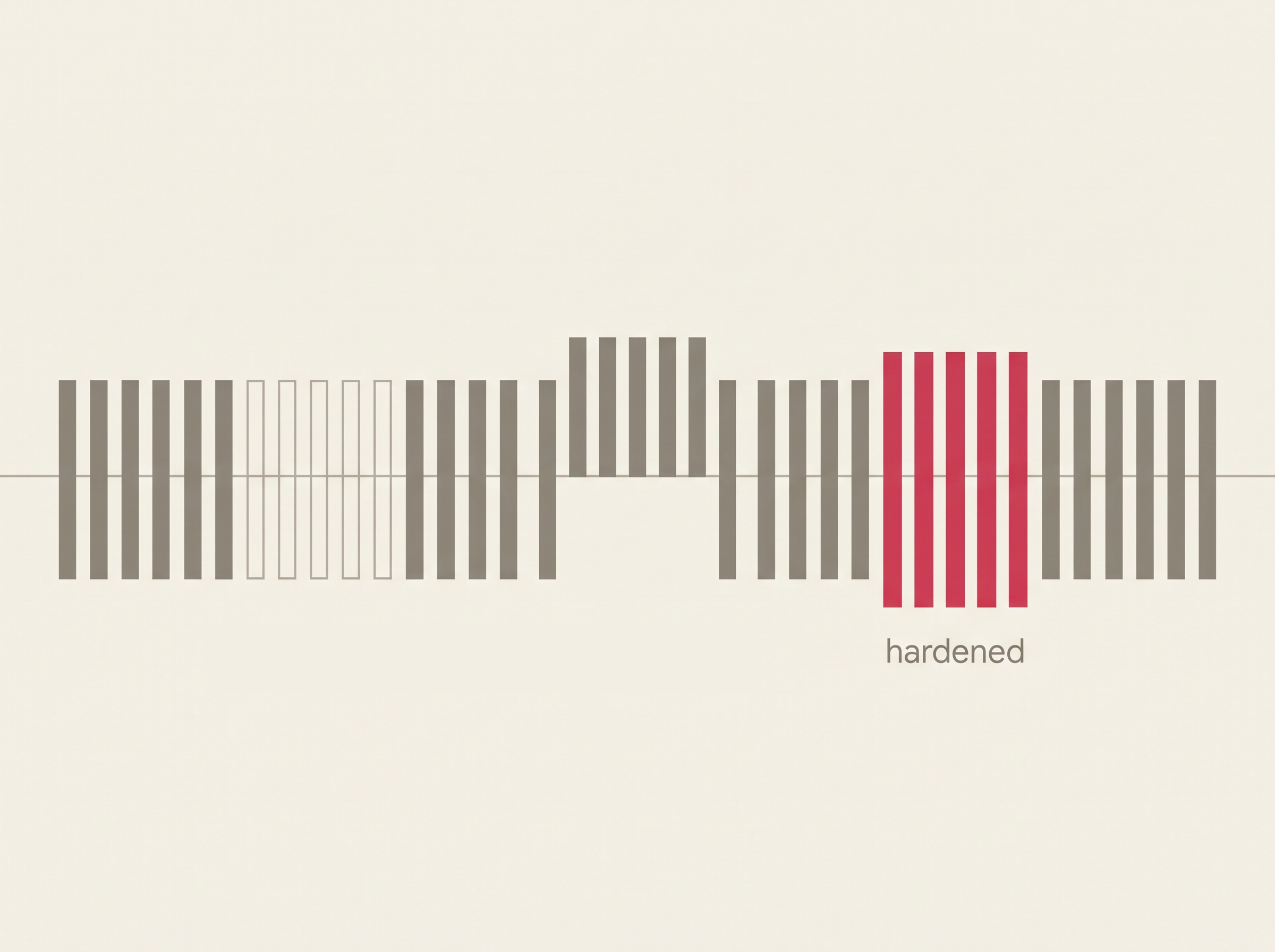
Synthetic data generation for LLM post-training has a quiet failure mode: the model doing the generating hallucinates, and most pipelines have no way to catch it except a human spot-check or a blunt reward-model filter. Reward-only filtering is bad at this. It's tuned for helpfulness and fluency, not truth, so it lets ungrounded claims straight through.
CuratorKit closes that gap with provenance. Every generated sample carries an append-only record linking it back to the source chunk it came from, so claims can be checked against evidence rather than model self-confidence. Nothing gets accepted or rejected on vibes.
The pipeline, end to end:
- HallucinationGate. Verifies each claim against its source passage using the provenance record, not post-hoc retrieval. Catches ungrounded output before it reaches your training set.
- RewardGate. Scores instruction-output quality against preference rubrics, on top of the hallucination check.
- DiagnosticProbe. When a sample fails, this identifies why: temperature drift, parametric leakage, a flawed instruction. A failed sample isn't just "bad," it's bad for a specific, fixable reason.
- RewardRefiner. Rewrites the output to address the specific critique from DiagnosticProbe, while preserving the underlying claims. Recoverable samples get recovered instead of thrown away.
That diagnose-and-repair loop is what sets CuratorKit apart from hard filtering. On benchmark datasets spanning legal contracts (CUAD), biomedical abstracts (PubMedQA), and Wikipedia, it hits an F1 of 0.614 on faithfulness detection, against 0.184 for reward-only filtering. Its recovery pipeline achieves 89.3% injection recall, against 48.7% for naive resampling. And because it repairs instead of discarding, it accepts 42% more total samples than a hard-filtering approach, without lowering the bar on faithfulness.
CuratorKit also handles the parts of curation that have nothing to do with hallucination: secrets detection, PII pseudonymization, toxicity filtering, embedding-based dedup, and multi-dimensional LLM-judge quality scoring. It ingests from JSONL, JSON, CSV, Parquet, HuggingFace datasets, or PDFs, and generates across eight task types: QA, preference pairs, GRPO rollouts, multi-turn conversations, Evol-Instruct, chain-of-thought, and adversarial variants. Exports land in Alpaca, ShareGPT, DPO, GRPO, or PPO format, with train/val/test splits and a full manifest (manifest.json, rejected.jsonl, dataset_card.md, checksums.txt) so every dataset is auditable after the fact.
Who it's for
- Teams building synthetic post-training data who need provenance, not just a quality score.
- ML teams that lose too much good data to hard filtering and want a repair step instead.
- Anyone shipping data into a regulated or audited context, where "why was this sample accepted" needs a real answer.
Links:
- arXiv: https://arxiv.org/abs/2606.11127
- Dataset: https://huggingface.co/datasets/Lexsi/provenance-grounded-synthetic-qa
- Authors: Soham Bhattacharjee, Karun Sharma, Vinay Kumar Sankarapu, Pratinav Seth (Lexsi Labs)